Don’t risk your revenue. Use our 5-step blueprint for a successful Shopify Plus migration, covering data integrity, SEO preservation, and a flawless launch.
Why Shopify Migration Requires a Strategy-First Approach
Migrating an ecommerce store is not a technical task, it’s a business transformation. Too often, brands approach migration as a simple platform switch, only to face traffic drops, revenue loss, broken integrations, and operational chaos after launch.
At Turnaround, we believe a successful Shopify migration begins long before data is moved. As a migration-first Shopify Plus agency, our focus is not just on getting you onto Shopify, but on ensuring the move unlocks growth, reduces technical debt, and future-proofs your business.
Whether you’re replatforming from Magento, WooCommerce, BigCommerce, or a custom solution, Shopify Migration Considerations must be addressed holistically—strategy, data, SEO, UX, and integrations working together.
Pre-Migration Audit & Ecommerce Replatforming Strategy
A pre-migration audit checklist is the foundation of a zero-downtime, low-risk Shopify transition. This phase determines whether your migration becomes a growth catalyst or an expensive setback.
Business Goals & Growth Alignment
Before migrating, merchants must ask:
- Where is the business heading in the next 12–36 months?
- Are international expansion, B2B, subscriptions, or omnichannel part of the roadmap?
- Does Shopify Plus support these goals better than the current platform?
Migration for growth means aligning Shopify’s native strengths—scalability, checkout performance, ecosystem—with your future ambitions.
Why Shopify Migration Requires a Strategy-First Approach
Migrating an ecommerce store is not a technical task—it’s a business transformation. Too often, brands approach migration as a simple platform switch, only to face traffic drops, revenue loss, broken integrations, and operational chaos after launch.
At Turnaround, we believe a successful Shopify migration begins long before data is moved. As a migration-first Shopify Plus agency, our focus is not just on getting you onto Shopify, but on ensuring the move unlocks growth, reduces technical debt, and future-proofs your business.
Whether you’re replatforming from Magento, WooCommerce, BigCommerce, or a custom solution, Shopify Migration Considerations must be addressed holistically—strategy, data, SEO, UX, and integrations working together.
Pre-Migration Audit & Ecommerce Replatforming Strategy
A pre-migration audit checklist is the foundation of a zero-downtime, low-risk Shopify transition. This phase determines whether your migration becomes a growth catalyst or an expensive setback.
Business Goals & Growth Alignment
Before migrating, merchants must ask:
- Where is the business heading in the next 12–36 months?
- Are international expansion, B2B, subscriptions, or omnichannel part of the roadmap?
- Does Shopify Plus support these goals better than the current platform?
Migration for growth means aligning Shopify’s native strengths—scalability, checkout performance, ecosystem—with your future ambitions.
Identifying Platform Pain Points
Most ecommerce store migrations are triggered by friction:
- Slow site speed and performance bottlenecks
- High development and maintenance costs
- Inflexible checkout experiences
- Security concerns or outdated architecture
A clear understanding of these pain points ensures the new Shopify build solves real problems, not just replicates old ones.
UX, Performance & Technical Debt Review
A migration is the perfect moment to clean house:
- Improve navigation and mobile usability
- Simplify customer journeys
- Remove unused features and bloated code
- Optimize Core Web Vitals
Reducing technical debt during migration leads to faster pages, happier users, and better conversions.
SEO & Integration Audit
SEO preservation is one of the most critical Shopify migration considerations. This audit includes:
- Existing keyword rankings
- High-performing URLs
- Backlink profiles
- Indexation and crawl health
Simultaneously, all integrations—ERP, CRM, fulfillment, analytics, email platforms like Klaviyo—must be documented to ensure a seamless Shopify integration planning process.
Shopify Data & Content Migration Checklist
Data migration is not about moving everything—it’s about moving the right things, in the right way, at the right time.
Product & Catalog Migration
This includes:
- Product titles and descriptions
- Images and media
- SKUs, variants, pricing
- Meta titles and descriptions
Data mapping for Shopify CSV imports must be precise to protect data integrity and merchandising logic.
Customer & Historical Order Migration
Customer data is the backbone of retention and personalization. A proper Shopify data migration includes:
- Customer profiles and contact details
- Account passwords (where possible)
- Tags and segmentation
Historical orders require third-party tools and expert handling. Brands that migrate historical orders to Shopify gain better reporting, customer support continuity, and long-term analytics value.
Reviews, Blogs & Custom Functionality
Social proof matters. Migrating reviews, ratings, and blog content preserves trust and SEO equity.
Custom features must be evaluated carefully—some can be replaced with Shopify-native solutions, while others require rebuilding.
Shopify Migration Methods Explained
| Method | When to Use |
| Manual Migration | Very small catalogs only |
| CSV Import | Standard products & customers |
| Third-Party Apps | Orders, reviews, complex datasets |
| Shopify Partner | Enterprise & Shopify Plus migrations |
Why a Shopify Migration Agency Matters
Enterprise-level ecommerce store migration to Shopify demands precision. A Shopify Plus migration expert ensures:
- Zero data loss
- SEO-safe URL mapping
- Correct import sequencing
- Minimal downtime
This is where Turnaround’s migration-first approach delivers measurable ROI.
Post-Migration Essentials for a Flawless Shopify Launch
Migration doesn’t end when the data lands in Shopify.
SEO Preservation & 301 Redirect Strategy
A robust Shopify 301 redirect strategy protects:
- Organic traffic
- Backlink authority
- Revenue from search
Every legacy URL must redirect cleanly to its Shopify equivalent—no exceptions.
Theme, Integrations & QA Testing
Theme selection must balance:
- Brand identity
- Performance
- Flexibility
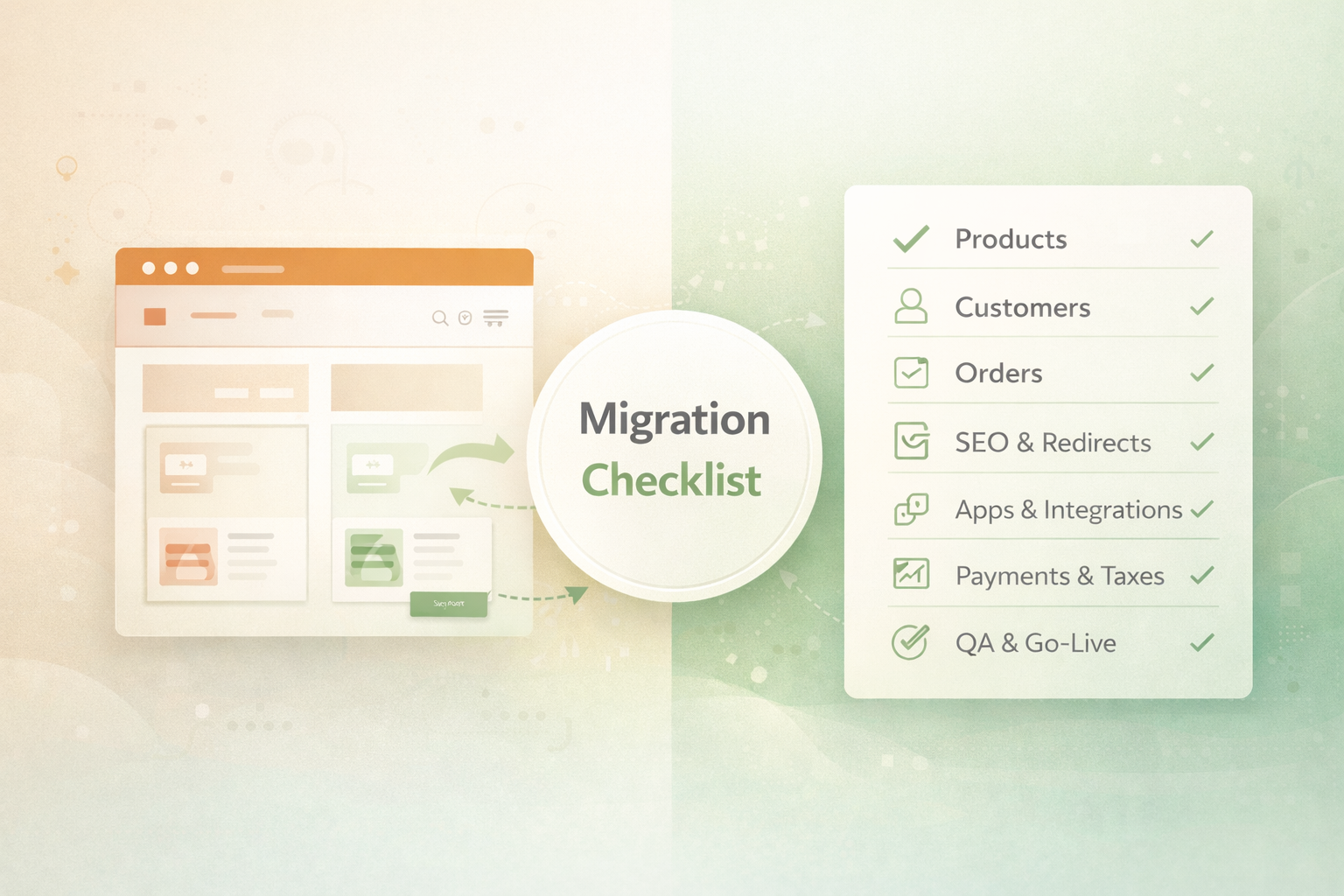
Post-migration testing includes checkout, payments, shipping rules, tax settings, and app integrations to ensure a flawless Shopify launch.
Strategic Takeaways for a Successful Shopify Plus Migration
- Order matters: Products → Customers → Orders
- Always test migrations before final execution
- Migration is a business strategy, not a dev task
- Partnering minimizes risk and accelerates growth
FAQs: Shopify Migration Considerations
1. How long does a Shopify Plus migration take?
Timelines vary, but enterprise migrations typically take 8–16 weeks depending on complexity.
2. Can SEO rankings be preserved during migration?
Yes—when technical SEO migration and 301 redirects are handled correctly.
3. Should historical orders be migrated?
Absolutely. Migrating order history improves analytics, support, and customer experience.
4. Is Shopify Plus suitable for enterprise brands?
Yes. Shopify Plus supports high-volume traffic, internationalization, and complex operations.
5. What’s the biggest migration risk?
Poor planning. Skipping the pre-migration audit leads to data loss and revenue drops.
6. Why work with a Shopify migration agency?
Expert partners reduce risk, ensure data integrity, and deliver a seamless Shopify transition.
Why Turnaround Is a Migration-First Shopify Plus Agency
Turnaround doesn’t treat migration as a side service—it’s our core expertise.
As a Shopify Migration Agency, we combine strategy, engineering, and SEO to deliver successful Shopify migrations that drive long-term growth, not short-term fixes.
Learn more about Shopify Plus capabilities at
👉 https://www.shopify.com/plus
Conclusion: Migration for Growth, Not Just Change
A Shopify migration is a once-in-several-years opportunity to reset, optimize, and scale. With the right strategy, tools, and partner, it becomes a strategic ecommerce upgrade that fuels sustainable growth.
At Turnaround, we don’t just migrate stores—we turn them around.